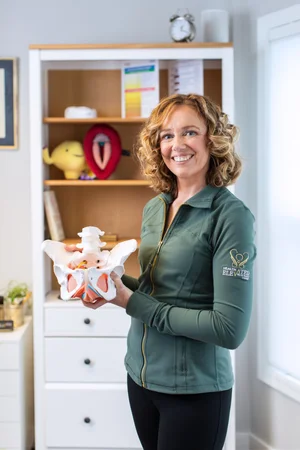
If you feel pelvic pressure, heaviness, dragging, or a sensation that something is “falling out,” you may be experiencing pelvic organ prolapse. These symptoms can be unsettling, but a prolapse diagnosis does not automatically mean you need surgery—or that you have to stop exercising and doing the things you enjoy.
Pelvic floor therapy and external support garments can offer practical, conservative ways to reduce symptoms and help you move with more confidence.
What is pelvic organ prolapse?
Pelvic organ prolapse occurs when one or more pelvic organs—such as the bladder, uterus, or rectum—descend toward the vaginal opening. Symptoms can vary throughout the day and may feel more noticeable after exercise, lifting, constipation, coughing, or spending a long time on your feet.
Common symptoms include:
Pelvic pressure or heaviness
A vaginal bulge or “tampon falling out” sensation
Difficulty emptying the bladder or bowels
Symptoms that worsen later in the day
Discomfort with exercise or prolonged standing
The degree of prolapse seen during an exam does not always match how disruptive the symptoms feel. That is why treatment should focus on the whole person—not simply a prolapse stage or measurement.
How can pelvic floor therapy help?
Pelvic floor therapy is about much more than doing Kegels. Your therapist looks at how your pelvic floor works with your breathing, abdominal muscles, hips, bowel and bladder habits, and daily movement patterns.
Treatment may include:
Improving pelvic floor strength, coordination, and endurance
Learning pressure-management strategies for lifting and exercise
Using 360-degree ribcage breathing to coordinate the core and pelvic floor
Addressing constipation, straining, or difficulty emptying
Modifying activities temporarily while gradually building capacity
Discussing additional supports, including pessaries or compression garments
The goal is not to make you afraid of movement. It is to help you understand your symptoms, reduce unnecessary strain, and return to the activities that matter to you.
Can compression garments help prolapse symptoms?
External support garments—such as the Pelvic Bra or SRC compression shorts and leggings—may help some people feel less pressure, heaviness, or dragging. They can be especially useful during exercise, lifting, travel, long workdays, or other times when symptoms tend to increase.
Think of external support like a sports bra for the pelvic floor: it does not cure prolapse or strengthen the muscles, but it may provide additional support and make movement feel more comfortable.
A small but interesting MRI study
In a small 2014 study, researchers used MRI to compare pelvic anatomy in 10 women while they wore different types of supportive underwear. Garments that provided stronger support from the thighs to the buttocks or from the pubic bone toward the tailbone elevated the bladder neck. Researchers also observed forward and upward movement of the levator plate and elevation of the perineal body.
This does not prove that every compression garment will produce the same result, and the study did not specifically test the Pelvic Bra or SRC products. Still, it offers an interesting anatomical explanation for why appropriately designed external support may help some people feel better.
A separate small MRI study of 12 women with advanced prolapse evaluated a specialized external support device called the FemiCushion. With the device in place, the prolapsed pelvic structures were positioned higher, and the pelvic openings measured smaller during straining. Together, these early findings are promising, but larger studies are still needed.
External support is one tool—not the whole plan
Compression garments can be used alongside pelvic floor therapy, not in place of it. The right approach depends on your symptoms, activities, comfort, and goals. Some people use external support only for workouts or longer days, while others prefer more regular support. A pelvic floor therapist can help you decide whether a garment, pessary, exercise modification, or combination of strategies makes the most sense for you.
You deserve options that help you feel supported—not restricted.
If pelvic pressure, heaviness, or a bulging sensation is affecting your day, Pelvic Health Elevated can help you understand what is happening and build an individualized plan to keep you moving confidently.
References
Ninomiya S, et al. “Examination of the mechanism to elevate bladder neck position by supportive underwear.” Journal of Nursing Science and Engineering. 2014;1(1):31–39. https://doi.org/10.24462/jnse.1.1_31
Nomura Y, et al. “Magnetic resonance imaging evaluation of the effectiveness of FemiCushion in pelvic organ prolapse.” Journal of Obstetrics and Gynaecology Research. 2022;48(5):1255–1264. https://doi.org/10.1111/jog.15210