Why Do I Look Pregnant After I Eat?
The Hidden Cause of Bloating Many Women Have Never Heard Of
You eat a normal meal… and suddenly your stomach blows up like you’re four months pregnant.
By evening your jeans don’t fit.
You feel tight, uncomfortable, and frustrated.
But here’s the confusing part:
Your GI tests look normal, or the SIBO, constipation, or gut issue you were treated for has already improved.
So why does the bloating still happen?
One possible reason is something called Abdominophrenic Dyssynergia (APD).
What Is APD?
APD isn’t about how much gas is in your gut.
It’s about how your body manages pressure in your abdomen.
Normally when you eat:
your diaphragm relaxes upward
your abdominal wall supports your core
pressure stays balanced inside the trunk
With APD, the pattern flips:
the diaphragm pushes downward
the belly relaxes outward
your abdomen visibly distends forward
That’s why the bloating can look dramatic and immediate, even if digestion itself is normal.
Why It Often Happens After GI Issues
APD commonly develops after things like:
SIBO
chronic constipation
IBS
repeated bloating episodes
When your abdomen is repeatedly distended or painful, your nervous system can learn a maladaptive pressure pattern.
Even after the gut issue improves, the pattern can stick around.
So many women are left thinking:
“My gut problem is better… but I still look pregnant after eating.”
How Pelvic Health Therapy Helps
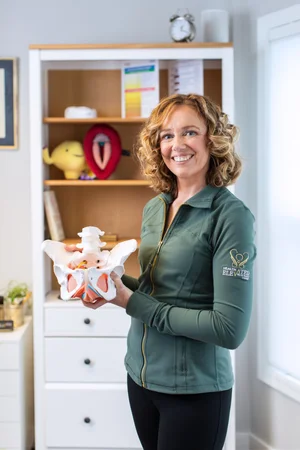
Pelvic health therapists specialize in the coordination between the:
diaphragm
abdominal wall
pelvic floor
ribcage
Together these muscles manage pressure inside the body.
When they stop working together properly, symptoms like bloating, distention, constipation, and pelvic pressure can appear.
Pelvic health therapy helps retrain this system through:
• ribcage breathing and diaphragm mobility
• abdominal wall coordination
• pelvic floor balance
• better pressure management
The Takeaway
If you feel like you’re walking around looking pregnant after every meal, even after your digestive issues have improved, the problem may not be your gut anymore.
It may be how your body learned to manage pressure.
And that’s something pelvic health therapy can help retrain.
Because constant bloating and abdominal distention is not something you just have to live with.