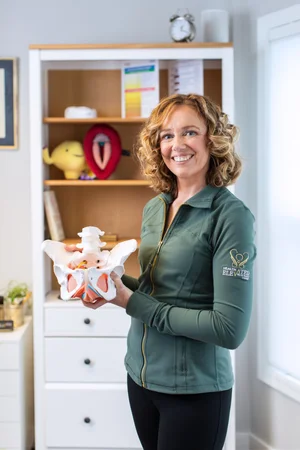
If you've ever leaked urine during jumping jacks, avoided a fitness class because of burpees, or stopped running because someone told you it was "bad for your pelvic floor," you're not alone.
Many women quietly remove jumping, running, and other high-impact activities from their lives because they assume these movements are damaging their pelvic floor. While symptoms like leaking, heaviness, or pelvic pain should never be ignored, the answer is not always to stop moving.
In fact, jumping is a normal human movement that many women can safely return to with the right support.
The Pelvic Floor Is Not Just "Weak" or "Tight"
One of the biggest myths in pelvic health is that pelvic floor problems are always caused by weakness.
In reality, the pelvic floor is a dynamic group of muscles that must respond to changing demands throughout the day. Sometimes these muscles lack strength. Sometimes they are overactive and struggle to relax. Sometimes they have difficulty coordinating with the rest of the body.
Most often, the issue is not simply strength or tightness—it's capacity.
Your pelvic floor needs to be able to lengthen, absorb force, react quickly, and generate support when needed.
What Happens When You Jump?
Every time your feet hit the ground, force travels through your body.
Your pelvic floor works together with your diaphragm, abdominal muscles, hips, and legs to manage that force. Ideally, these systems coordinate automatically and efficiently.
When the demands placed on the body exceed what the system can currently handle, symptoms may appear:
Urinary leakage
Pelvic heaviness or pressure
Pelvic pain
Low back or hip discomfort
A feeling of instability during exercise
These symptoms do not automatically mean you should never jump again. They may simply be a sign that your body needs a different strategy or a gradual progression to rebuild capacity.
Avoidance Isn't Always the Answer
Many women spend years modifying workouts to avoid symptoms.
They stop jumping.
They stop running.
They stop lifting heavier weights.
They stop participating in activities they enjoy.
While symptom modification can be helpful in the short term, long-term avoidance may actually reduce your body's ability to tolerate these activities.
Just like any other tissue in the body, the pelvic floor adapts to the demands placed upon it. If we never challenge it, it never has the opportunity to become more resilient.
How a Pelvic Health Therapist Helps
At Health Elevated, our goal is rarely to tell someone to stop doing the activities they love forever.
Instead, we help determine:
Why symptoms are occurring
Whether the pelvic floor is overactive, underactive, or poorly coordinated
How breathing, pressure management, strength, and movement patterns contribute
What level of impact your body can currently tolerate
From there, we create a progressive plan to build capacity.
That may begin with:
Walking
Strength training
Balance exercises
Low-level impact activities
And gradually progress to:
Hopping
Skipping
Jumping
Running
Sports-specific movements
The goal is not simply to eliminate symptoms. The goal is to help your body tolerate the demands that matter to you.
Your Pelvic Floor Should Be Able to Respond to Life
Life is full of impact.
We jump to reach things.
We run after children and grandchildren.
We step off curbs.
We exercise.
We play sports.
A healthy pelvic floor is not one that never experiences force. It is one that can respond appropriately when force occurs.
If leaking, pelvic pressure, or pain are preventing you from participating in activities you enjoy, don't assume you have to give them up forever.
With the right assessment and a personalized plan, many women can successfully return to the movements they thought were off limits.
Don't Normalize Symptoms
Leaking when you jump, exercise, cough, laugh, or sneeze may be common, but it is not something you simply have to accept.
If you've stopped doing activities you love because of pelvic floor symptoms, pelvic health therapy can help you understand what's happening and create a plan to safely return to movement with confidence.